5 Steps to Take When You Need a Car Heater Core Replacement
A working heating system does more than keep you comfortable when it’s cold outside. It also helps defrost your windshield and relies on parts connected to your engine’s cooling system. One of those parts is the heater core. This small component plays an important role in keeping warm air moving through your vehicle while also working closely with the coolant that helps control engine temperature.
The heater core uses heat from your engine coolant to warm the air entering the passenger area. When the heater core starts leaking or develops another problem, you may notice several changes. The cabin may not get as warm as usual. You might smell something unusual, see fog on the windshield, or notice that your vehicle is losing coolant. These signs can help point you toward a possible heater core problem.
When you’re facing a car heater core replacement, it helps to understand the problem before approving repairs. Knowing what’s happening can make the decision much easier. These five steps will help you recognize common symptoms, understand what replacement involves, compare repair costs, and decide what makes the most sense for your vehicle.
Step 1: Recognize the Signs of a Failing Heater Core
A failing heater core can cause several noticeable problems. One common sign is little or no warm air coming through the vents, even after your engine reaches its normal operating temperature. That doesn’t always mean the heater core has failed. Several other problems can stop your heater from working properly, so a lack of cabin heat alone isn’t enough to confirm the cause.
You may also notice a sweet smell inside your vehicle. Engine coolant often has a distinct, sweet odor that can be fairly easy to recognize. When the heater core leaks, coolant or coolant vapor can sometimes enter the passenger area. An unusual smell doesn’t confirm the problem by itself, but it’s worth paying attention to, especially when you notice other signs at the same time.
Watch your windshield for unusual fogging or a greasy film on the inside of the glass. Your heating and defrost systems direct air toward the windshield to help keep your view clear. Coolant vapor from a leaking heater core can travel with that air and collect on the glass. This may cause fogging or leave behind a film that makes the windshield harder to see through clearly.
It’s also worth checking for damp areas inside your vehicle. Depending on where the leak is and how severe it becomes, coolant may collect underneath the dashboard. You could also find wet carpeting on the passenger side. Check your coolant level as well. A level that keeps dropping without an obvious reason may point to a leak somewhere within the vehicle’s cooling system.
Don’t ignore ongoing coolant loss. Your engine depends on the cooling system to control its temperature while you drive. Losing enough coolant can cause the engine to overheat and may lead to more damage. Have the vehicle checked promptly when you notice continued coolant loss, overheating, or other signs that suggest the cooling system may be leaking.
Step 2: Have the Heater Core Problem Diagnosed
The heater core is usually located behind or underneath your vehicle’s dashboard. Hot engine coolant moves through small passages inside the core. Air passes across this heated component and picks up warmth before flowing through the vents and into the cabin. This process helps provide the warm air you use for cabin heat and supports the vehicle’s defrost system.
Because your heating and cooling systems work together, several problems can cause similar symptoms. A faulty thermostat may affect cabin heat. Low coolant can cause problems too. A clogged cooling-system component, damaged hose, or another issue may also prevent the heater from working as expected. That’s why the symptoms you notice don’t always point directly to the heater core.
Before deciding that your heater core needs replacement, have the problem properly diagnosed. A qualified technician can inspect the heating and cooling systems and look for signs of a leak. They can also check related parts that could cause similar symptoms. A careful diagnosis helps determine whether the heater core is actually responsible or whether another component needs attention instead.
Does a Bad Heater Core Always Need Replacement?
The right repair depends on what’s actually causing the problem. Sometimes the heater core itself isn’t the source. A damaged hose, loose connection, or another related component could be responsible for the symptoms you’re experiencing. When one of those parts is causing the problem, replacing the entire heater core may not be necessary to get your heating and cooling system working properly again.
A leaking or physically damaged heater core may need replacement. Your technician can inspect the core and determine whether repairing another part could solve the problem. They can also check related cooling-system components while diagnosing the issue. This can help identify other work that may be worth considering while parts of the vehicle are already accessible during the heater core repair.
Ask the repair shop to explain what it found before you approve the work. You should also request a written estimate showing the expected repair costs. Understanding which component failed and why the shop recommends replacement gives you useful information. You can then compare your options and make a more informed choice about what you want to do with the vehicle.
Step 3: Understand What Heater Core Replacement Involves
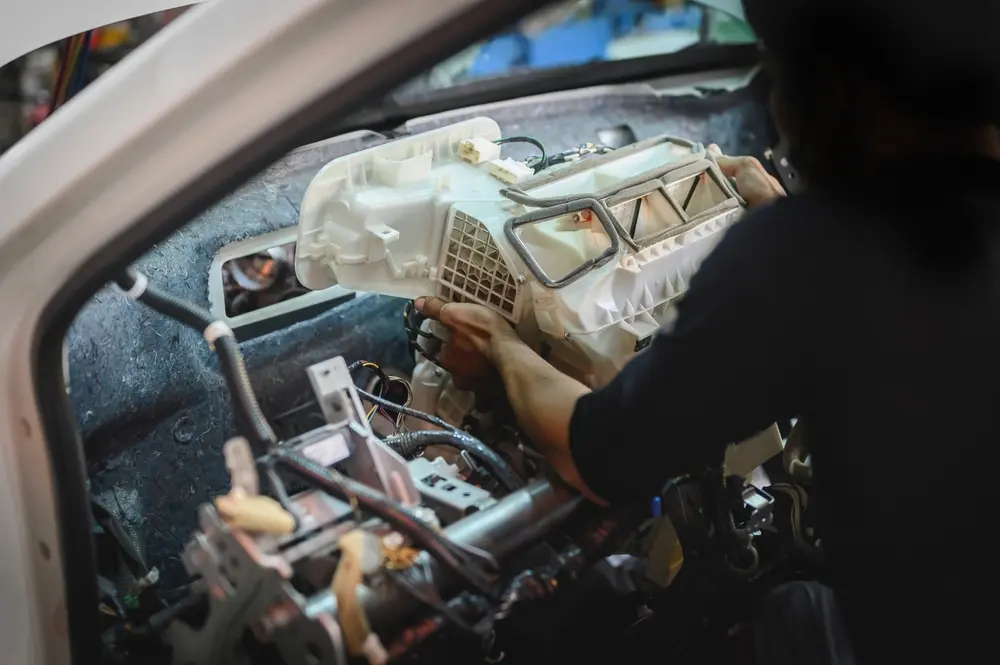
A heater core itself is fairly small, but getting to it can be difficult. In many vehicles, the core sits behind the dashboard inside the heating, ventilation, and air conditioning system. Reaching it may require removing dashboard panels along with other interior parts. The exact amount of work depends heavily on how your particular vehicle was designed and where the heater core is located.
The cooling system also needs attention during this repair. Your heater core connects to the engine’s cooling system through heater hoses that carry coolant. The technician needs to work with that coolant safely while following the proper repair procedures for your vehicle. These steps help make sure the new heater core is installed correctly and the cooling system is properly serviced afterward.
Once the technician can reach the old heater core, it can be removed and replaced with the new part. After installation, the surrounding components must be put back together. The technician also needs to check the system for leaks and make sure everything operates properly. Replacement procedures can vary quite a bit between vehicle makes and models, so the amount of work isn’t the same for every car.
All of this helps explain why labor costs can be significant. The heater core is only one component, but reaching and replacing it may take considerable time. When you compare repair estimates, look at the complete job instead of focusing only on the replacement part’s price. The amount of disassembly and reassembly required can have a major effect on the total cost.
Can You Replace a Heater Core Yourself?
Replacing a heater core can be a challenging project to handle yourself. Depending on your vehicle, you may need to remove large sections of the dashboard and work with cooling-system parts. The job can also involve disconnecting electrical connections and properly refilling the cooling system afterward. Even an experienced DIYer may find that the amount of disassembly makes this repair more involved than expected.
Coolant also needs to be handled carefully throughout the repair. Clean up spilled coolant promptly and keep it away from children and animals. Used automotive coolant shouldn’t be poured onto the ground or dumped down a drain. Instead, it needs to be handled and disposed of according to the requirements in your area. Proper cleanup and disposal are important parts of completing this type of repair responsibly.
Anyone planning a DIY heater core replacement should have the right tools, enough repair experience, a suitable workspace, and service information for the specific vehicle. Access and replacement procedures vary widely between models. For many vehicle owners, having a professional complete the replacement may be the more practical choice, especially when the repair requires extensive dashboard removal or other complicated work.
Step 4: Consider Heater Core Replacement Costs
Heater core replacement costs can vary quite a bit from one vehicle to another. Your vehicle’s year, make, and model can affect the price. The replacement part, local labor rates, and the heater core’s location also matter. A repair that’s fairly straightforward on one vehicle may require much more work on another, making it difficult to use one general price as a reliable estimate.
Labor may make up a large part of your repair bill because reaching the heater core can require extensive interior disassembly. Some vehicles have heater cores that technicians can access more easily. Others may require much of the dashboard to be removed before work can begin. The more time needed to reach and replace the component, the more labor can affect the final repair cost.
Your estimate may include more than the price of a new heater core. Depending on the vehicle and what caused the original problem, the repair could involve coolant, hoses, seals, clamps, or other related parts. Ask the technician what needs replacement and why. This can help you understand exactly what you’re paying for instead of judging the estimate based only on the heater core itself.
Rather than depending on a broad nationwide price range, ask for a written estimate for your specific vehicle. Find out which parts are included, how much labor is expected, and whether the technician found related problems that need attention. You’ll have a clearer repair figure to compare against your vehicle’s age, overall condition, approximate value, and any other work it may need.
Step 5: Decide Whether Heater Core Replacement Is Worth It
A failed heater core doesn’t automatically mean you should replace your vehicle. Your car may still be dependable and in good overall condition. In that situation, completing the repair could allow you to keep driving it rather than replacing a vehicle that otherwise meets your needs. Consider the heater core problem as one part of the vehicle’s larger condition before deciding what makes sense.
The choice can become harder when an older vehicle already has other mechanical problems. Compare the heater core repair estimate with the vehicle’s approximate value and overall condition. Think about other repairs that may be coming soon as well. A single repair may feel reasonable on a dependable vehicle, while several expensive repairs can change how much money you’re comfortable putting into an older car.
Upcoming engine, transmission, suspension, brake, or air conditioning repairs may influence your decision. Consider the condition of these systems and whether you already know that major work is approaching. How long you plan to keep the vehicle matters too. Spending money on a repair may make more sense when you expect to continue using the vehicle for a while.
There isn’t one repair price that determines whether heater core replacement makes sense for every vehicle. Each situation is different. Consider the repair estimate, your vehicle’s condition and value, other expected repairs, and how much longer you want to own it. Looking at those details together can help you decide whether repairing the heater core or choosing another option makes more sense for you.
Donating a Vehicle With Heater Core Problems
When you decide not to replace the heater core, you still have several options for the vehicle. You may choose to sell it, trade it, or donate it. Donation can be worth considering when you no longer want to spend money on repairs or deal with selling a vehicle that has a known mechanical problem.
Goodwill Car Donations accepts many types of vehicles. These can include cars, trucks, motorcycles, recreational vehicles, boats, and personal watercraft. Both running and non-running vehicles may qualify for donation, depending on the acceptance requirements. This gives you another possible option when heater core problems or other repairs have made you decide that you no longer want to keep the vehicle.
The process starts by providing information about your vehicle so its eligibility can be determined. For eligible donations, Goodwill Car Donations can arrange free towing. That can be especially helpful when coolant loss, overheating, or another mechanical problem makes you uncomfortable driving the vehicle. You won’t need to risk driving a vehicle that you believe may have a serious cooling-system problem.
Title requirements can vary by state. When you have questions about the paperwork needed for your vehicle, contact Goodwill Car Donations for guidance. The team can explain the requirements that apply to your donation so you know what documentation you’ll need before moving forward with the process.
After pickup, donors receive the appropriate documentation for their vehicle donation. Goodwill Car Donations can also answer additional questions about how the donation process works. You can learn more about what happens after your vehicle is collected and how donated vehicles help support participating organizations and programs.
FAQs About Car Heater Core Replacement
The total cost depends on your vehicle, the replacement heater core’s price, local labor rates, and how difficult the part is to reach. Labor can make up a large portion of the bill when the technician needs to remove much of the dashboard. Getting an estimate for your specific vehicle will give you a more useful number than relying on a broad average repair cost.
Fixing a heater core can make sense when your vehicle is otherwise dependable and the repair cost fits its age, value, and overall condition. The decision may be harder when an older vehicle already needs several costly repairs. Consider the heater core estimate along with the rest of the vehicle’s condition and any other major work you expect it to need soon.
Heater core replacement can be difficult because the component is often located behind the dashboard. Reaching it may require extensive interior disassembly along with work on the vehicle’s cooling system. The exact difficulty depends on the vehicle. Because the job can involve considerable time and disassembly, many owners may prefer having a qualified professional complete the replacement.